
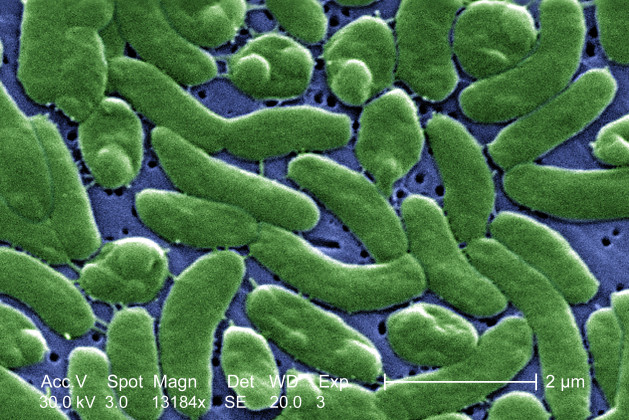
State officials have confirmed one case of a Baldwin County resident contracting the vibrio vulfinicus bacteria. The state would not confirm where the victim contracted the bacteria.
This means that the victim could have been in any coastal waters. Experts say the Gulf and bay waters are potential homes for vibrio vulfinicus, often called “flesh eating bacteria” for the way it rapidly destroys layers of tissue. The bacteria thrive among shellfish and shrimp and people can become infected by eating raw or undercooked seafood or exposing a wound to seawater.
According to the Centers for Disease Control, most infections occur from May through October when water temperatures rise.
Officials are urging beach goers to resist panic.
“This is not going to happen to everyone who gets in the water every time they get in the water,” said Kimberly Westbrook, M.D., Chair of the Infection Control Committee at Thomas Hospital.
Individuals with existing medical conditions or weakened immune systems are more at risk to suffer from this bacteria and a host of others that live in fresh and salt waters.
Westbrook urges common sense and caution.
If you have an open wound don’t get in the bay, or any water outside of your shower for that matter,” she said. A cut, scratch or open wound gives any type of bacteria an entry to your body.
Westbrook suggests washing off when you finish swimming.
“Just because you’ve been in water doesn’t mean you are clean,” she said.
And if you notice you have a scratch after coming out of the water, clean it and watch it. If it turns red or swells be seen immediately.
“Don’t wait until it’s crawling up your leg to go in,” Westbrook said. “And if you’ve been in water let the staff know there has been that exposure.
“Some of these bacteria can move pretty rapidly. As soon as you see something go be seen,” she said. “It’s better to go in and be told it’s ok than to wait too long.”


